Hello! I'm delighted to provide you with exclusive one-on-one consultation.
How can I assist you?
What is the process and cost of egg freezing?


As the age of marriage and childbearing continues to rise and reproductive needs become increasingly diverse, more people are beginning to learn about IVF in advance. Some turn to IVF because natural conception has not resulted in pregnancy, some hope to preserve their reproductive options, while others need to choose overseas assisted reproductive care based on their individual circumstances.
How does IVF actually work?
IVF, or in vitro fertilization and embryo transfer (IVF-ET), is not simply a matter of “retrieving eggs and putting them back into the uterus.” A complete cycle typically includes preliminary examinations, ovarian stimulation, egg retrieval, fertilization, embryo culture, embryo testing, and embryo transfer.
Before starting a cycle, doctors generally assess the woman’s age, AMH, baseline hormone levels, antral follicle count, and previous reproductive history, while also evaluating the man’s semen parameters. The examination results can affect the subsequent ovarian stimulation plan and help doctors assess in advance the potential number of eggs and embryos that may be obtained in a cycle.
During ovarian stimulation, medications are used to promote the simultaneous development of multiple follicles, with continuous monitoring through ultrasound and hormone testing. Once the follicles reach the appropriate stage, egg retrieval is performed while sperm is collected. The eggs and sperm are then fertilized in the laboratory, followed by continued embryo culture.
Why is embryo culture an important part of IVF?
Successful fertilization does not mean that a transferable embryo will necessarily be obtained. The fertilized egg needs to undergo continuous cell division, gradually developing from an early-stage embryo into a blastocyst. During this process, some embryos may stop developing, so the number of embryos that ultimately reach the transfer stage is generally reduced further.
The laboratory culture environment, embryo culture techniques, and the experience of embryologists are all important aspects to consider during an IVF cycle. For those planning IVF in the US, Mexico, or Japan, understanding the embryo laboratory facilities and capabilities of the hospital or fertility center is equally important.
Why is IVF-PGT worth learning about in advance?
As the age at which people begin trying to conceive continues to rise, increasing attention is being paid to chromosomal abnormalities in embryos. As women age, the probability that embryos formed from their eggs will have chromosomal abnormalities may increase, making genetic evaluation at the embryo stage increasingly important.
After an embryo develops to the blastocyst stage, IVF-PGT, which is genetic testing of embryos in IVF-PGT, can be performed to analyze the embryo’s chromosomal status and provide more detailed information for subsequent embryo selection and transfer.
The United States, Mexico, and Japan each have their own healthcare systems and characteristics in assisted reproductive medicine. When making a decision, it is important to look beyond the country or region itself and further understand the medical team, laboratory conditions, ovarian stimulation and egg retrieval protocols, embryo culture capabilities, as well as subsequent embryo testing and transfer arrangements.
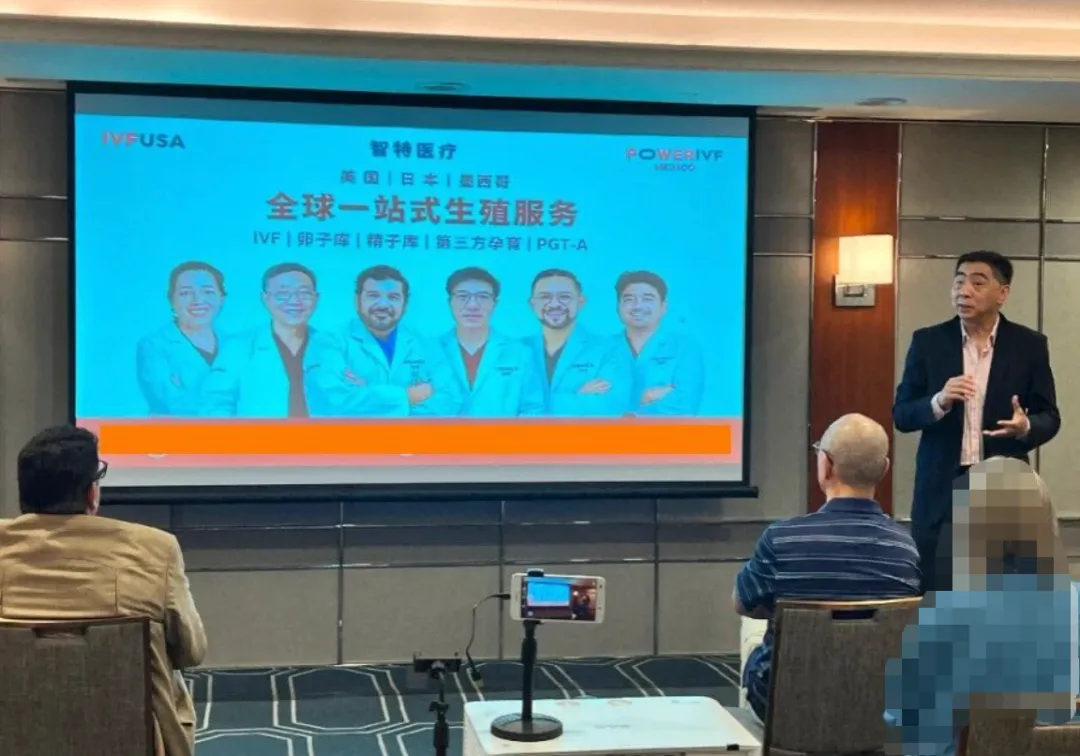
The team founded by Dr. Nathan Zhang has been engaged in overseas assisted reproductive consultation services for more than ten years, providing services such as egg freezing in the United States, IVF in the United States, and third-party assisted reproduction for those in need. With nearly 20 years of experience in the field of overseas assisted reproduction, IVF USA established an early presence in the Mexican market based on the diverse and individualized nature of reproductive needs and became the Chinese representative of Power Fertility Center Mexico POWER Reproductive Center (POWER IVF). Dr. Nathan Zhang’s business has now expanded beyond the United States to include IVF and egg freezing in Mexico, IVF and egg freezing in Japan and Thailand, as well as services in Taiwan and Hong Kong. For those whose reproductive plans have not yet been fully determined, understanding the complete pathways for IVF and egg freezing before deciding which direction to take can often make the next step more manageable.


Online Customer Service

In-Vitro Fertilization (IVF)
Female Egg Freezing

Fertility Assessment

Scan for Consultation

Back to Top