


您好!很高兴为您提供一对一的专属咨询。
请问有什么可以帮您?
冻卵的流程和价位是什么?


In the past, “having IVF” was often a topic some families preferred not to bring up. As assisted reproductive technology has gradually become more widely understood, more people have begun to realize that the way a family builds itself does not need to carry any additional sense of shame.
IVF Is Not the “Last Step”
Many people only begin seriously considering IVF after repeated unsuccessful attempts at natural conception. In reality, whether to enter an assisted reproductive process should be assessed based on factors such as age, time spent trying to conceive, ovarian reserve, fallopian tube conditions, semen parameters, and previous reproductive history. Not everyone needs to spend a long time trying to conceive naturally before considering IVF.
Especially for people whose age is advancing but who do not currently have plans to have children and still want to preserve their reproductive options, egg freezing in the U.S., Mexico, and Japan is also a path worth learning about in advance. Egg freezing preserves mature oocytes obtained at the present time. If they are needed in the future, they will still need to undergo warming, fertilization, and embryo culture. Therefore, understanding the entire process early can make it easier to arrange time appropriately.
What Really Matters Is the Entire Reproductive Journey
IVF is not simply a matter of completing “egg retrieval” and “embryo transfer.” Once a cycle begins, it usually also involves ovarian stimulation, egg retrieval, sperm preparation, fertilization, embryo culture, and transfer. Each stage involves corresponding medical decisions, and the outcome of one stage can affect the arrangements for the next. For example, the number of eggs retrieved does not equal the final number of embryos available for transfer. Mature eggs need to be fertilized and continue developing, and some embryos may not reach the blastocyst stage.
IVF-PGT Is Worth Understanding at the Embryo Stage
For families who have reached the embryo stage, IVF-PGT in IVF-PGT is a technical step worth understanding in depth. By conducting corresponding genetic testing on embryos, more information related to their genetic characteristics can be obtained, providing a reference for subsequent embryo selection and transfer planning.
IVF-PGT is not a comprehensive prediction of a future child, nor can it guarantee an ideal outcome from a single treatment. However, incorporating embryonic genetic information into the overall IVF plan can provide more medical information to support decision-making at the embryo stage.
If treatment has not yet begun, egg freezing in the U.S., Mexico, and Japan can also be incorporated into long-term fertility planning. The purpose is not to decide in advance that IVF will definitely be needed in the future, but to understand your reproductive timeline and leave room for different possibilities that may arise later.
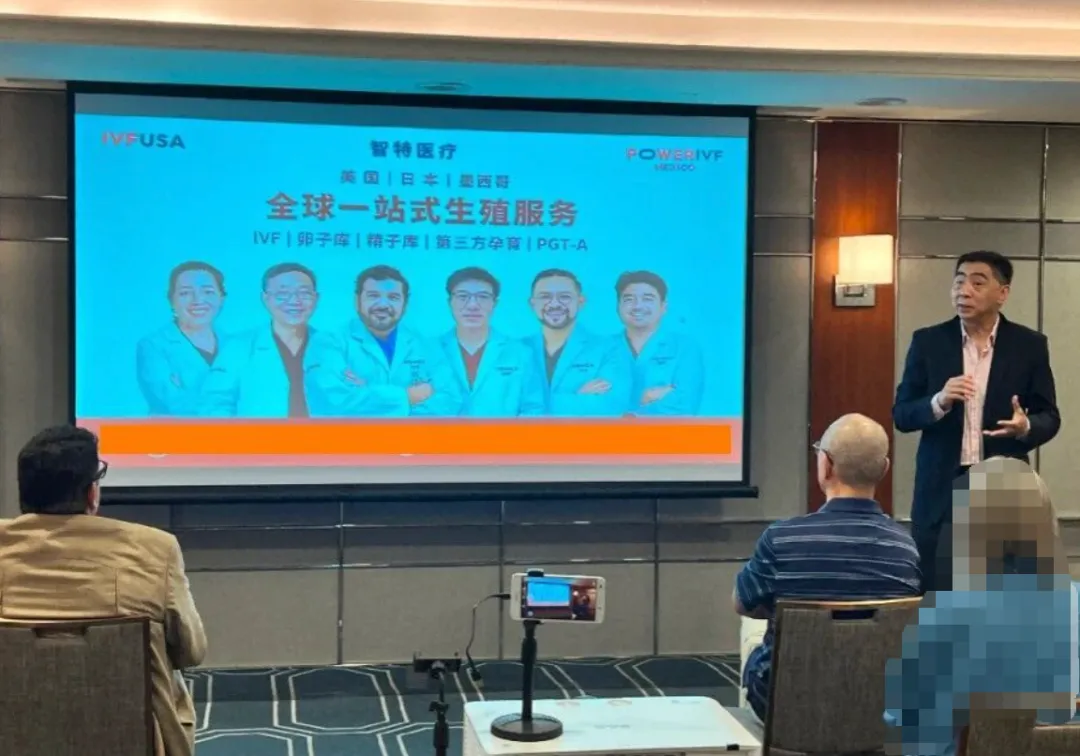
The team founded by Dr. Nathan Zhang has been engaged in overseas assisted reproductive consulting services for more than ten years, providing services including egg freezing in the United States, IVF in the United States, and third-party assisted reproduction for people in need. With nearly 20 years of experience in the overseas assisted reproduction field, IVF USA has responded to the diversification and individualization of reproductive needs by establishing a presence in the Mexico market at an early stage and becoming the representative in China for Power Fertility Center Mexico POWER Fertility Center (POWER IVF). Dr. Nathan Zhang’s services have now expanded beyond the United States to include IVF and egg freezing in Mexico, IVF and egg freezing in Japan and Thailand, as well as services in Taiwan and Hong Kong.