Hello! I'm delighted to provide you with exclusive one-on-one consultation.
How can I assist you?
What is the process and cost of egg freezing?


As more people begin planning their families earlier, many are no longer waiting until they are ready to conceive before learning about assisted reproductive technology. Instead, they start exploring IVF in the U.S., Mexico, and Japan and egg freezing in the U.S., Mexico, and Japan while considering career development, health changes, or long-term family planning. At the same time, one question has become increasingly common among people preparing for pregnancy: Will frozen eggs, sperm, or embryos lose quality over time? And how long can they actually be stored?
Why Can Frozen Reproductive Cells Maintain Their Quality for So Long?
Modern assisted reproductive technology uses ultra-low-temperature cryopreservation. Today, vitrification is the most widely used freezing technique. It rapidly cools cells to approximately -196°C in liquid nitrogen. At this temperature, cellular metabolism nearly stops completely, meaning the cells neither continue developing nor gradually age as they would under normal conditions.
Why Is Egg Freezing Becoming More Popular?
For many women, age remains one of the most important factors affecting egg quality. As women grow older, both the quantity and quality of eggs gradually decline. As a result, many individuals choose egg freezing in the U.S., Mexico, and Japan earlier in life to preserve their fertility while their reproductive potential is still relatively strong.
Does Sperm Freezing Affect Future Fertilization?
Many men also wonder whether sperm can still function normally after being stored for many years.
Current research shows that as long as standardized cryopreservation techniques are used and storage conditions remain stable, the duration of storage itself is generally not a major factor affecting fertility potential. Although some sperm may experience a slight decrease in motility after thawing, assisted reproductive treatment only requires an adequate number of healthy, viable sperm to achieve successful fertilization.
For this reason, sperm freezing has become a mature and reliable option for individuals who wish to preserve their fertility in advance.
What Are the Advantages of Frozen Embryos?
Compared with freezing eggs or sperm separately, frozen embryos have already completed fertilization, making future embryo transfer more straightforward.
Today, most laboratories culture embryos to the blastocyst stage before cryopreservation. In addition, IVF-PGT has become one of the major advantages of modern assisted reproductive technology. Through preimplantation genetic testing, IVF-PGT helps identify embryos with better developmental potential, improves overall pregnancy efficiency, reduces the risk of miscarriage caused by chromosomal abnormalities, and has made IVF-PGT increasingly important in clinical practice.
After high-quality blastocysts complete IVF-PGT and are cryopreserved in liquid nitrogen, they also remain in a stable state and do not continue aging simply because they are stored for a longer period. For individuals who wish to build their families in stages, frozen embryos offer greater flexibility for future reproductive planning.
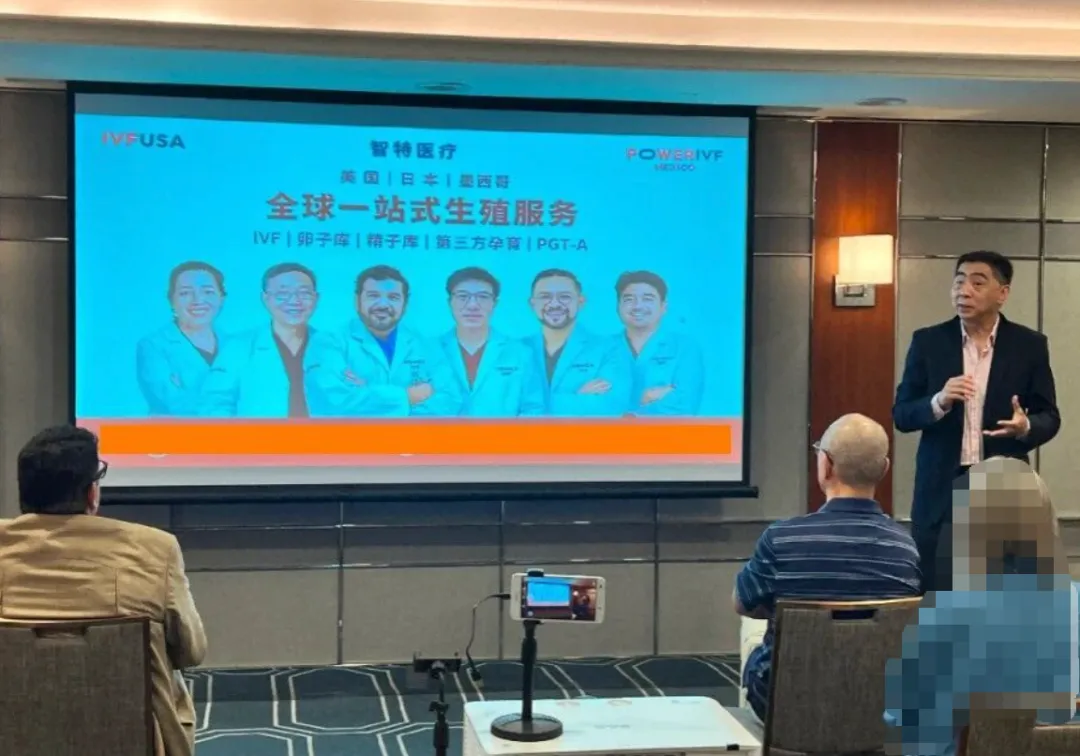
The IVF USA team founded by Dr. Nathan Zhang has been providing international assisted reproductive consultation services for more than a decade, offering egg freezing in the United States, IVF in the United States, and third-party assisted reproduction for individuals and families in need. With nearly 20 years of experience in international reproductive medicine, IVF USA recognized the growing diversity and personalization of fertility needs early on and strategically expanded into the Mexican market, becoming the Chinese representative of Power Fertility Center (POWER IVF) in Mexico. Today, Dr. Nathan Zhang's services have expanded beyond the United States to include IVF and egg freezing in Mexico, Japan, Thailand, as well as Taiwan and Hong Kong. Following the professional insights shared by IVF USA and Dr. Nathan Zhang can help you gain a more comprehensive understanding of assisted reproductive technology, allowing you to approach these treatments with greater confidence and preparation when the time comes.


Online Customer Service

In-Vitro Fertilization (IVF)
Female Egg Freezing

Fertility Assessment

Scan for Consultation

Back to Top