


您好!很高兴为您提供一对一的专属咨询。
请问有什么可以帮您?
冻卵的流程和价位是什么?


Many women only start seriously learning about their eggs after they begin trying to conceive. Some find that it takes longer to prepare for pregnancy as they get older, some temporarily have no plans to have children due to work or marriage and family planning, while others only realize that the quantity and quality of their eggs do not remain unchanged when they learn about egg freezing or IVF. To understand the significance of egg freezing, it may be helpful to start with the life of the egg itself.
When Do Eggs Begin to Form?
Female oocytes are formed before birth. At birth, the ovaries already contain a certain number of oocytes, and new eggs are not continuously produced after birth. As age increases, some of these oocytes are naturally depleted.
After puberty, a group of follicles begins to develop during each menstrual cycle. Usually, only one dominant follicle ultimately ovulates, while the remaining follicles undergo atresia. In other words, the ovulation women experience each month does not mean that the body temporarily “creates” a new egg, but rather that one egg is selected from the existing ovarian reserve.
What Really Needs Attention Is Not Just the Number of Eggs
As age increases, ovarian reserve gradually declines, and egg quality also changes. Particularly later in the reproductive years, the probability of chromosomal abnormalities in eggs increases. This is an important reason why age is closely associated with natural fertility, embryo development, and miscarriage risk.
Therefore, during the preconception stage, simply asking “How many eggs do I have left?” cannot provide a complete assessment of fertility. Tests such as AMH, baseline hormone levels, and antral follicle count can help assess ovarian reserve and response to ovarian stimulation, but ovarian reserve is not equivalent to egg quality, and future ability to become pregnant cannot be determined based on a single test result.
The significance of egg freezing lies in preserving mature eggs. Through ovarian stimulation, egg retrieval, and vitrification, the condition of the eggs at the time of retrieval can be preserved for future use.
When frozen eggs are actually used in the future, they still need to undergo warming, fertilization, and embryo culture. In some cases, ICSI may be used to help achieve fertilization, after which it is also necessary to observe whether the embryos can continue developing to the blastocyst stage. The number of usable embryos that can ultimately be obtained is related to age at the time of egg freezing, the number of mature eggs, and subsequent fertilization and embryo development.
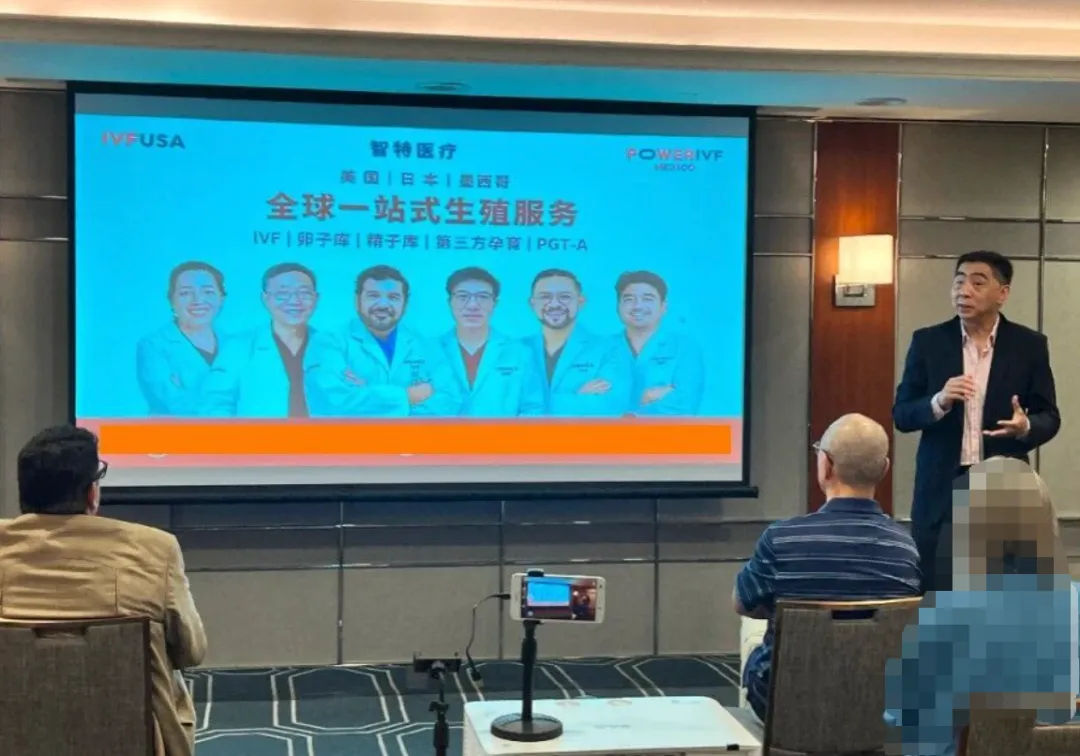
The team founded by Dr. Nathan Zhang at IVF USA has been engaged in overseas assisted reproductive consulting services for more than ten years, providing U.S. egg freezing, U.S. IVF, and third-party assisted reproductive services for those in need. With nearly 20 years of experience in the field of overseas assisted reproduction, IVF USA has responded to the diversification and personalization of reproductive needs by entering the Mexican market early and becoming the China agent for Power Fertility Center, Mexico POWER Fertility Center (POWER IVF). Dr. Nathan Zhang’s business has now expanded beyond the U.S. to include IVF and egg freezing in Mexico, IVF and egg freezing in Japan and Thailand, as well as services in Taiwan and Hong Kong, providing information and reference for different stages of reproductive needs.